People toss around “marketing,” “sales,” “business development,” and “growth” like they’re all interchangeable. They're not. Sure, they all help a company succeed, but each works in its own distinct way.
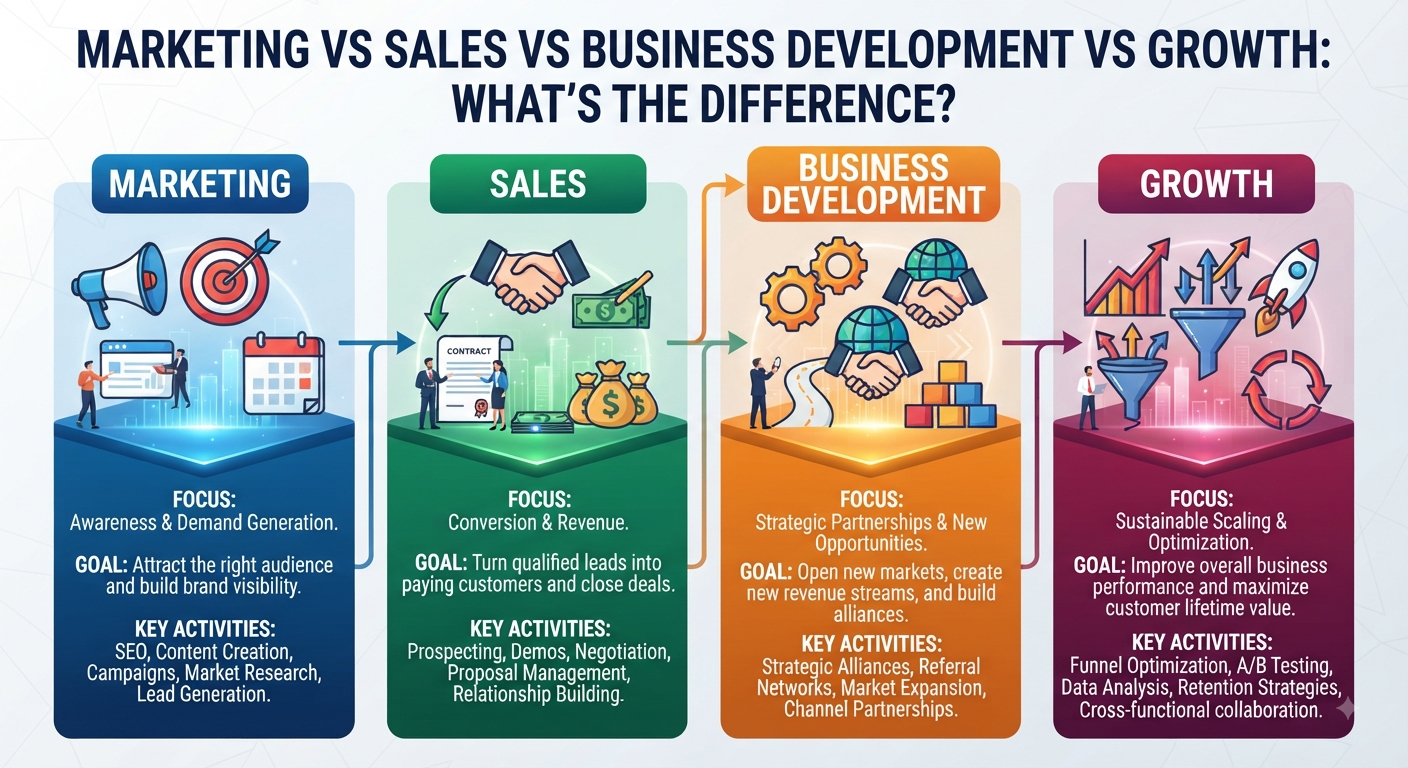
Marketing grabs attention and builds interest. Sales turns that interest into paying customers. Business development opens up brand-new opportunities and builds partnerships. Growth digs into the whole business system, aiming to make everything run smoother and scale up faster.
Knowing the differences helps business owners put together better teams and fix the right issues.
1. Marketing: Catching the Right Eyes
Marketing is about getting noticed by people who actually matter to your business.
Nobody’s buying if they don’t even know your company exists, right? Marketing creates that awareness gets your name out there and makes people curious about what you offer.
You’ll see marketing through things like:
- SEO and content
- Social media posts and campaigns
- Paid ads
- Email blasts
- Branding work
- Researching markets and audiences
- Generating leads
- Tuning up your website and landing pages
Picture a web design company publishing guides on website trends, running Google ads, and sharing ideas on Instagram. They reach people who might need new websites and prompt them to take action.
Bottom line: Marketing builds awareness and makes people care enough to check you out.
2. Sales: Turning Interest Into Cash
Sales gets down to business it turns curiosity into actual purchases.
Once someone bites, sales steps in. The team talks with prospects, figures out what they need, explains the solution, handles doubts, negotiates, and closes deals.
Common sales moves include:
- Picking up the phone and calling prospects
- Meeting, online or in-person
- Demonstrating products or services
- Figuring out requirements
- Quoting prices and proposals
- Negotiating terms
- Following up with leads
- Closing deals
Say a company gets 100 website inquiries. That’s not guaranteed money. Sales has to weed out the best prospects, tailor solutions, and convince them to become customers.
Put simply: Sales turns interest and leads into revenue.
3. Business Development: Opening New Doors
Business development often gets mixed up with sales probably because both chase business growth but BD is broader.
It’s about building fresh revenue streams, forming new partnerships, and unlocking opportunities you didn’t have before.
Think about a web development company teaming up with digital marketing agencies, branding shops, or IT consultants. These partners start referring clients who need a new site. No need to chase every customer individually a smart network keeps the leads coming.
Business development means:
- Building strategic partnerships
- Creating referral networks
- Entering new markets
- Managing corporate relationships
- Setting up channel partnerships
- Landing key strategic accounts
- Finding fresh ways to make money
Quick summary: Business development finds new ways to bring in revenue.
4. Growth: Making Everything Work Better
Growth takes a big-picture approach improving how the whole business operates and how customers move through every step.
The growth team isn’t stuck in marketing or sales. They look at everything: customer experience, retention, pricing, conversion rates, all the little things that can speed up business.
Imagine a company gets 10,000 visitors to its site, but scores just 20 customers each month. The growth team will start asking questions:
- Are we attracting the right people?
- Is our site convincing enough?
- Is the offer clear or confusing?
- Is our inquiry process a headache?
- Are sales reps following up fast?
- Where are the best leads slipping through the cracks?
- Can we boost customer retention?
Growth is about spotting the weak links and fixing them, so the whole engine runs smoother.
In a nutshell: Growth makes the entire business better, top to bottom.
Marketing vs Sales vs Business Development vs Growth
| Function | Main Focus | Primary Goal |
|---|---|---|
| Marketing | Awareness and demand | Attract the right audience |
| Sales | Conversion | Win customers |
| Business Development | New opportunities | Create new revenue channels |
| Growth | Overall performance | Improve sustainable growth |
How They Fit Together
They're not isolated silos; they’re more like teammates.
Take a software company: Marketing creates content, runs ads, and pulls in leads. Sales reaches out to those leads, learns what they need, demonstrates the product, and closes deals. Business development builds connections with consultants and other firms who send new customers their way. Growth studies the whole setup and spotlights where leads drop off or sales stall.
If marketing delivers tons of leads but only a few become customers, the growth team jumps in to figure out why. Maybe the leads aren’t a good match, or the sales pitch falls flat, or the price isn’t clear enough, or follow-ups are too slow. You get it they look for what’s holding things back.
Each piece plays a different role in the business machine.
Which Role Does Your Business Need?
Depends where you’re stuck.
If people barely know you exist, focus on marketing.
If you’ve got tons of leads but not enough customers, sales needs work.
If you’re after new markets, new partnerships, more ways to make money, step up business development.
If your customers stick around but growth feels sluggish, pricey, or unpredictable, start thinking about a growth-focused approach.
Before hiring, nail down what’s blocking your business and go after it.
Ask yourself: “What’s really stopping us from growing right now?”
The answer points you to the right function.
Final Takeaway
Marketing, sales, business development, and growth aren’t rivals each is a gear in your business system.
- Marketing pulls in attention.
- Sales converts that attention into paying customers.
- Business development uncovers new opportunities to earn.
- Growth keeps everything running smoother.
If you know how these parts fit together, your company moves from chasing one-off leads to building a steady, scalable revenue engine.
Don’t just pile on more marketing, sales, or partnerships. Aim to build a business where the right people discover you, become loyal customers, new opportunities keep showing up, and everything keeps getting better over time.
Discussion (0)
Leave a Reply
No confirmed discussions contributed yet. Be the first to start the thread!