Ever look at your bank account and wonder where your salary went?
You get paid, pay the bills, buy groceries, maybe treat yourself to a few outings and somehow, your money just slips away. If you’ve felt this, you’re definitely not the only one.
Usually, the problem isn’t that you earn too little. It’s that there’s no plan for your money.
That’s exactly why the 50/30/20 budget rule works so well. It’s straightforward, doesn’t need fancy spreadsheets or a finance degree, and helps you give every rupee a job. You end up spending with purpose, saving regularly, and still enjoying life minus the guilt.
Whether you’re a student living off a stipend, earning a fixed salary, freelancing, or running a business, this method gives you the control you need over your finances.
What Exactly Is the 50/30/20 Rule?
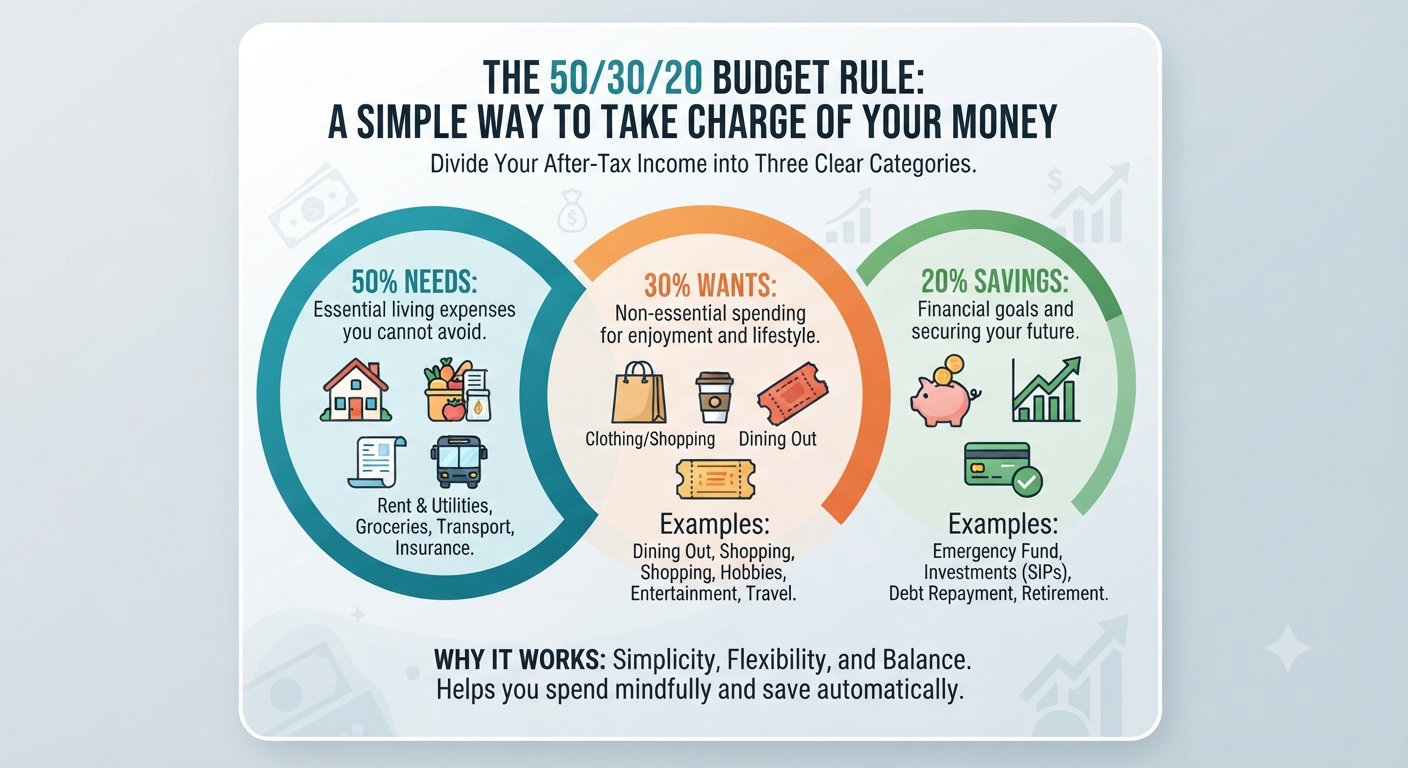
The idea is simple: split your monthly income into three basic buckets.
- 50% goes to Needs: your must-pay expenses.
- 30% covers Wants: the things, activities, and treats you enjoy.
- 20% gets saved or invested for your future.
Instead of wondering, “Can I afford this?” you start asking, “Does this fit in my budget?” That tiny shift changes the way you handle money.
The First 50%: Take Care of Your Needs
Needs are the non-negotiables, the costs you can’t really avoid. Stuff like:
- Rent or home loan EMIs
- Groceries and basic food
- Electricity, water, and utility bills
- Mobile and internet
- Transport to work or school
- Insurance premiums
- Kids’ school fees
- Doctor visits and medicines
Try to keep all these to half your income. If it’s way over 50%, it’s usually a sign you need to rethink some fixed costs.
The Next 30%: Enjoy the Things You Love
Money isn’t just about paying bills. It’s for living, too.
This slice is for life’s little (and big) joys, like:
- Going to restaurants
- A new gadget now and then
- Shopping trips
- Coffee outings with friends
- Movie nights, OTT subscriptions
- Weekend getaways
- Hobbies and interests
It’s important to enjoy your money but always after you’ve taken care of basics and savings.
The Final 20%: Pay Your Future Self
This bit is the real game-changer.
Every month, before spending on extras, put aside that 20% for your future:
- Emergency fund
- SIPs in mutual funds
- Stocks or equity
- PPF
- Fixed deposits
- Retirement plans
- Loan repayments
- Your kids’ education costs
Start early, and compounding does some magic over the years.
A Real Example
Suppose you bring home ₹60,000 a month.
50% – Needs (₹30,000)
Rent: ₹14,000
Groceries: ₹6,000
Bills: ₹3,000
Transport: ₹4,000
Insurance & Healthcare: ₹3,000
30% – Wants (₹18,000)
Restaurants: ₹5,000
Shopping: ₹6,000
Entertainment: ₹3,000
Weekend fun: ₹4,000
20% – Savings (₹12,000)
SIP: ₹7,000
Emergency fund: ₹3,000
Fixed deposit: ₹2,000
You handle bills, have a life, and your future gets a boost. Most people struggle to strike this balance, but with this rule, it just falls into place.
But What If You Earn Less?
That’s the beauty of this rule it flexes with your income.
If you make ₹30,000 a month, it shakes out like this:
- Needs: ₹15,000
- Wants: ₹9,000
- Savings: ₹6,000
Even if saving 20% seems impossible, start with what you can. What matters most is sticking to the habit, not the exact amount.
Why So Many People Use This Rule
There’s a reason the 50/30/20 rule sticks:
- Super easy to remember
- Works for any income
- Simple to start no fancy tools
- Lowers money stress
- Makes you spend more thoughtfully
- Grows your wealth over time
- Stops lifestyle inflation before it starts
More than anything, it helps you build money habits that actually last.
Common Budgeting Pitfalls
Even with a plan, people slip up. Here’s what trips them up most:
- Only saving what’s left after spending
- Spending more after a raise (lifestyle creep)
- Ignoring the impact of small, daily buys
- Living on credit cards
- Skipping the emergency fund
- Not checking expenses every month
Skip these habits, and you’ll notice your finances feel a lot more solid.
Should You Tweak the Rule?
The 50/30/20 rule is more of a starting point than a strict rulebook.
Maybe you pay sky-high rent and need 60% for basics. Maybe you want to become debt-free faster, so you boost your repayments. Or you dream of early retirement, so you push savings to 30-40%.
The numbers can flex. The main thing is to spend mindfully and keep saving, always.
Practical Tips to Make It Stick
- Track your spending for a month you’ll be surprised by the patterns
- Automate savings the moment your salary hits the account
- Cut out subscriptions you barely use
- Whenever your income jumps, bump up your savings and investments too
- Build an emergency fund for 3–6 months of expenses
- Check your budget once a month and tweak it if needed
Remember, budgeting isn’t about saying “no” to everything. It’s helping you say “yes” to what you truly want.
Final Thoughts
How much you earn matters, but how you manage it matters more.
The 50/30/20 rule gives you a simple, realistic path: handle your must-haves, enjoy your life, and still make your future self proud. You don’t need to get it 100% right the first time or ever. Just start with your next paycheck, keep going, and improve bit by bit. Those small steps add up to something big.
In the end, a budget isn’t about making life smaller it’s about giving your money a purpose.
Frequently Asked Questions
Is the 50/30/20 rule good for beginners?
Absolutely. It’s one of the easiest ways to start managing your money.
Should investments be a part of savings?
Yes! That 20% can include your emergency fund, SIPs, retirement plans, fixed deposits, and any long-term investment.
What if my essentials cost more than half my income?
It happens, especially in expensive cities. Focus on trimming fixed costs and aim for a better balance over time.
Can freelancers or self-employed folks use this rule?
Of course. Just do your budget based on your average monthly income over the past 6–12 months.
Discussion (0)
Leave a Reply
No confirmed discussions contributed yet. Be the first to start the thread!