If you have a smartwatch or fitness tracker, you’ve probably come across a metric called HRV, or Heart Rate Variability. At first, it might just look like a confusing number. Is a higher value always better? Should you worry if it drops? Does it really matter?
The answer: it matters, but only if you actually know what you’re looking at.
HRV is turning into one of the most valuable health numbers you get from wearables these days. It tells you a lot about how your body deals with stress, sleep, workouts, getting sick, and bouncing back. The thing is, people often compare their HRV to someone else’s or chase some magic “perfect” number, and that’s just missing the point.
This guide breaks down what HRV is, how to read your own numbers, what affects your score, which devices do a good job measuring it, and how you can boost it without jumping through hoops.
What Is Heart Rate Variability?
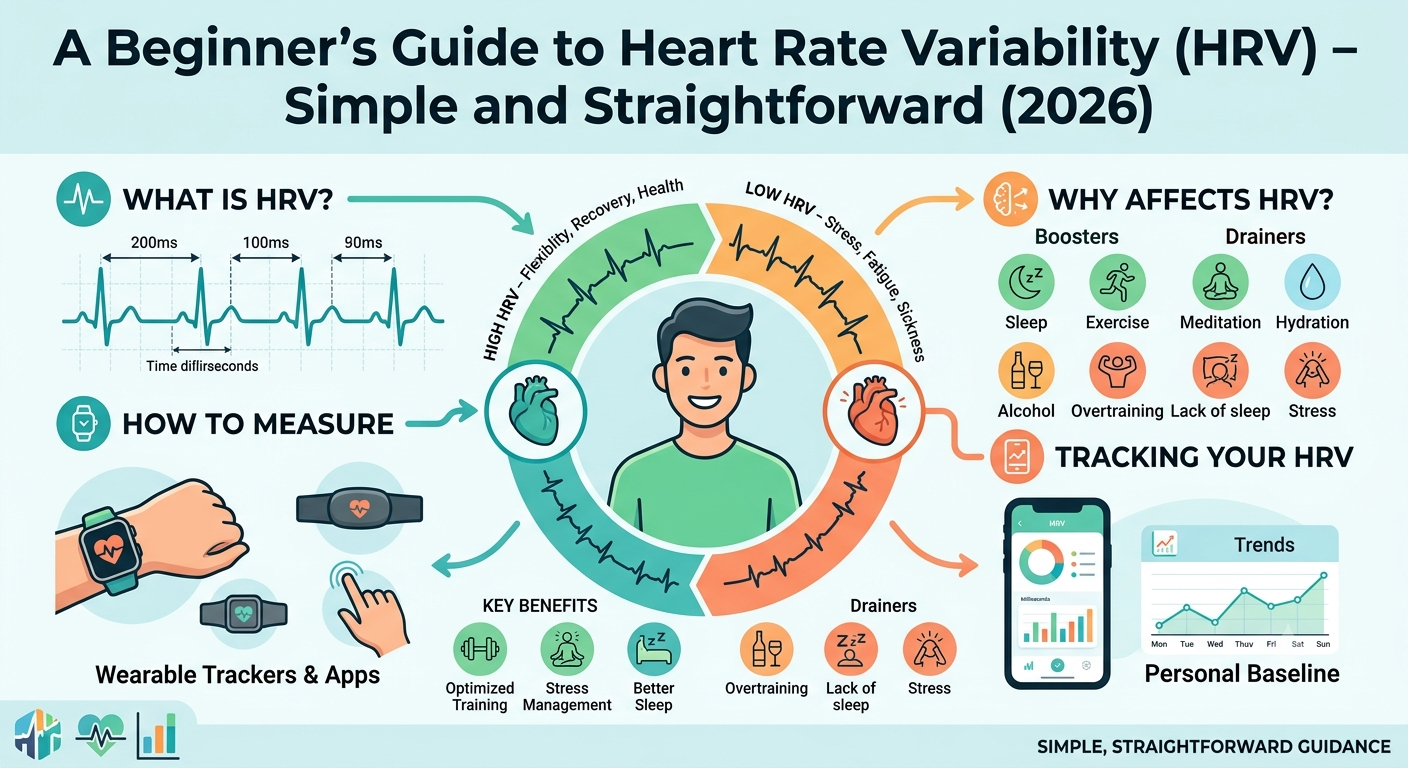
Heart Rate Variability is just the little changes in timing between each heartbeat.
Let’s say your heart rate is 60 beats per minute. That doesn’t mean it ticks exactly once every second. One beat might come after 0.95 seconds, another after 1.08, and so on. That slight irregularity? That’s HRV.
A healthy nervous system is always adjusting your heartbeat, getting your body ready for whatever’s next. So, bigger swings in HRV usually mean your body’s flexible and recovering well. When HRV dips, it can be your body’s way of saying, “Hey, I’m stressed or wiped out.”
Why HRV Matters
HRV goes way deeper than a basic resting heart rate.
Here’s what it can show you:
- How well you’re bouncing back after exercise
- How you’re handling physical or mental stress
- Sleep quality
- Heart health in general
- If you’re ready to push yourself or need rest
- Early clues you’re about to get sick even before you feel symptoms
- Wellness patterns over the long run
So don’t sweat the daily ups and downs. The real info comes from tracking your HRV pattern over several weeks.
How HRV Is Measured
Most smartwatches and trackers use little optical or ECG sensors to pick up on those tiny differences between heartbeats.
The most common ways they score HRV:
- RMSSD (you’ll see this used by most wearables)
- SDNN
- PNN50
You don’t need to learn the math. Your device crunches the numbers and gives you an easy-to-read HRV score.
What’s a “Normal” HRV?
Honestly, there’s no gold-standard HRV value. A “good” number depends on things like your age, fitness, genes, sleep, stress, and lifestyle.
Here’s a quick rundown of typical ranges:
| Age | Typical HRV |
|---|---|
| 20–30 | Higher |
| 30–50 | In the middle |
| 50+ | Lower |
But really, the key is consistency. The most important thing is watching your own trend over time not competing against someone else’s numbers.
What Makes HRV Go Up?
Higher HRV usually means you’re treating your body well. Here’s what helps:
- Quality sleep
- Regular exercise
- Good nutrition
- Staying hydrated
- Managing stress
- Meditation and deep breathing
- Keeping a healthy weight
In general, making healthy changes boosts your HRV.
What Makes HRV Go Down?
It’s totally normal for HRV to dip from time to time. Here’s what can cause it:
- Not sleeping well
- Mental burnout or life stress
- Drinking alcohol
- Working out too hard without enough rest
- Not drinking enough water
- Getting sick or having a fever
- Jet lag or travel
- Recovering after tough workouts
One low HRV day isn’t a big deal. If your numbers stay down for several days, it’s worth paying attention.
Boosting HRV Naturally
You don’t need fancy supplements or gadgets. Focus on the basics:
- Prioritize Sleep: Shoot for 7–9 hours of restful sleep every single night.
- Exercise Regularly: Mix things up strength training, walking, cardio and don’t skip rest days.
- Tame Stress: Try meditation, yoga, journaling, or slow, deep breaths.
- Drink Plenty of Water: Even being a little dehydrated can drop HRV.
- Eat Real Food: Whole foods, lean proteins, healthy fats, fruits, and veggies keep your body running well.
- Watch the Alcohol: Drinking usually causes HRV to take a hit, especially while you’re recovering.
HRV vs. Heart Rate What’s the Difference?
Lots of people mix these up. They’re not the same.
| Heart Rate | HRV |
|---|---|
| Beats per minute | Variability in the timing between beats |
| Lower at rest is usually good | Higher tends to mean better recovery/flexibility |
| Shows basic heart activity | Shows how your nervous system is handling life |
You get the best picture by tracking both.
Best Devices for HRV Tracking
Not all wearables are created equal. Here’s a quick rundown:
Apple Watch
What it does: HRV tracking, ECG readings, sleep and fitness monitoring.
Why it’s great: Super accurate sensors and works smoothly if you use an iPhone.
Downsides: Pricey and best if you’re already in the Apple world.
Best for: iPhone owners who want solid overall health tracking.
Garmin Smartwatches
What it does: HRV status and training insights, sleep coaching, great recovery feedback.
Why it’s great: Long battery life and made for athletes and outdoor types.
Downsides: You’ll get the best HRV features with the fancier models.
Best for: Runners, fitness enthusiasts, data lovers.
Fitbit
What it does: Easy-to-read HRV trends, sleep and stress scores.
Why it’s great: Comfortable and simple to use with a good starter price.
Downsides: Some deeper data is behind a paywall.
Best for: Beginners and folks just focused on basic wellness.
Oura Ring
What it does: Tracks HRV, sleep, and recovery without a watch.
Why it’s great: Super comfortable for sleep and provides amazingly detailed sleep and recovery data.
Downsides: Need a subscription for full features.
Best for: Anyone serious about understanding sleep and recovery.
WHOOP
What it does: 24/7 HRV monitoring, measures recovery, strain, and sleep coaching.
Why it’s great: Top-notch feedback for training and recovery; highly popular with athletes.
Downsides: Membership required.
Best for: Hardcore athletes, performance junkies.
Quick Product Comparison
| Device | HRV Accuracy | Sleep Tracking | Battery Life | Best For |
|---|---|---|---|---|
| Apple Watch | Excellent | Excellent | 1–2 days | iPhone users |
| Garmin | Excellent | Very Good | 7–20 days | Athletes |
| Fitbit | Good | Good | 5–7 days | Beginners |
| Oura Ring | Excellent | Excellent | 5–7 days | Sleep buffs |
| WHOOP | Excellent | Excellent | Always on | Serious training |
A Real-World Perspective
No wearable can diagnose a disease with HRV alone. These devices are awesome at spotting trends and helping you adjust your habits, but your doctor knows best if you’re worried about something specific.
The smartest way to use HRV is to combine it with other data like your sleep, resting heart rate, how much you move, and most of all, how you actually feel.
HRV Myths
- Myth: Higher HRV is always better.
Truth: Your own baseline matters most. - Myth: One bad HRV day means you’re unhealthy.
Truth: Everyone’s numbers bounce around. It’s normal. - Myth: HRV can diagnose illnesses.
Truth: It’s a tool for wellness and trends not a doctor.
Frequently Asked Questions
Should I check HRV every day?
Definitely. Daily numbers let you spot real trends.
Is low HRV a danger sign?
Usually not. Temporary drops happen after stress, lack of sleep, or hard workouts.
When’s the best time to check HRV?
First thing in the morning or while sleeping when you’re relaxed and consistent.
Does exercise help HRV?
Absolutely. Regular workouts (plus recovery) usually push HRV in the right direction.
Final Thoughts
Heart Rate Variability is super valuable, but you get the most out of it by looking at your patterns and habits not by chasing a perfect score. Build a routine with solid sleep, balanced meals, stress management, movement, and rest. Track your progress, but remember no wearable replaces paying attention to yourself and making smart choices.
If you’re just getting started with HRV, give yourself some time. Watch the ups and downs, look for changes over weeks (not days), and use it to learn about your own body not to compare with friends or influencers. Your journey, your numbers, your progress.
Discussion (0)
Leave a Reply
No confirmed discussions contributed yet. Be the first to start the thread!