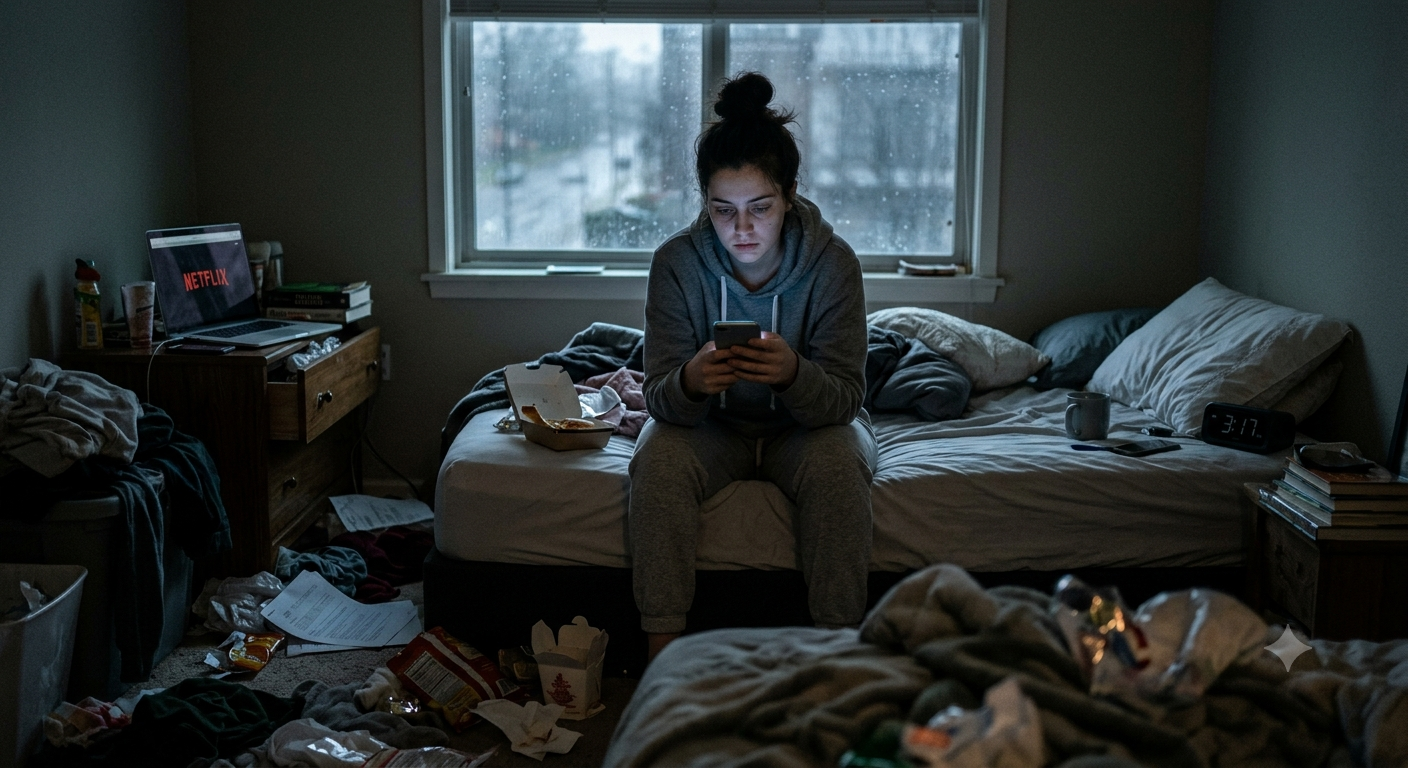
Home feels cozy and safe, and that’s good. But when it turns into your entire universe, you might start losing more than you notice.
It’s where we rest, unwind, and escape from everything outside. After a tough day, kicking back at home feels like a reward. There’s absolutely nothing wrong with prioritizing your own company or choosing quiet over chaos.
But there’s a line between enjoying home and disconnecting from the world.
If your days blend together, you move less, you talk to fewer people, and your routine starts to unravel your energy, mood, and drive can slip without you even realizing. Usually, these changes creep up as little habits: skipping your walk, letting calls go to voicemail, staying up late, or telling yourself you’ll get to it “tomorrow.”
Pretty soon, those habits stick.
Here’s what can go wrong when staying home turns unhealthy.
1. Isolation: When Your World Shrinks
Staying away from others feels peaceful at first no interruptions, zero pressure, and all the time for yourself.
But days become weeks, and you start losing touch with friends, family, and anyone who brought meaning to your life. Conversations dry up. Invitations get ignored. Sometimes, you go days without any real talk.
Funny thing is, isolation doesn’t always feel lonely right away. You get so used to being by yourself, you forget how much you’ve drifted.
Human connection isn’t just nice it’s how we share, understand, and feel like we belong.
How to break it
Don’t think you need a huge group. Call a friend. Meet someone for coffee. See your family. Join something local. Even small, regular contacts rebuild that sense of belonging.
Solitude is healthy. Losing the connections that lift you up isn’t.
2. Physical Weakness: When Your Body Gets Lazy
Our bodies are built to move. If you spend most days just bouncing between your desk, couch, and bed, you’re barely active.
Slowly, you get more tired, more stiff, and even basic things feel harder.
Sometimes, even if you rest enough, you still feel tired. Not moving, sleeping poorly, eating badly it catches up. And it just feeds the cycle: you feel drained, so you move less, which makes the fatigue worse.
How to break it
Keep it simple. Walk for 10–15 minutes. Stretch if you’re at your desk. Take the stairs. Try an easy home workout.
No need for fancy gyms or killer routines. Building a habit matters most.
If weakness hangs around or gets worse, don’t just blame laziness. Talk to your doctor and figure it out.
3. Overthinking: Worry Takes Up Too Much Space
Quiet can help you think, but when there’s no variety or meaningful activity, your mind starts looping on problems.
You replay old conversations. You stress over choices. You imagine the worst, or compare yourself endlessly.
Thinking harder doesn’t solve it. It ties you up in knots. Overthinking steals the energy you need for real action. You worry about what could happen, but struggle to do what might actually help.
How to break it
Notice when you’re stuck in a thought loop, and ask: Can I do something about this right now?
If yes, just do one thing. If not, write it down, and turn to something meaningful.
Go outside. Pick up a task. Talk to someone you trust. Try a simple relaxation method.
You don’t have to “solve” everything in your head before you live your life. Sometimes, just doing something brings the clarity you were missing.
4. Laziness and Procrastination: When Tomorrow Never Comes
You wake up with plans exercise, tackle work, learn something, get organized.
Then you check your phone, watch another video, or just lounge a bit more.
You promise yourself: one hour from now. Or tomorrow.
Soon, what you want and what you actually do get farther apart.
It’s tempting to call it laziness, but it’s more layered. Sometimes, your routine has no structure, you’re worn out, sleep-deprived, stressed, or in a slump so getting started feels impossible. When your environment rewards inactivity, even easy tasks start feeling tough.
One lazy day isn’t the problem it’s when putting things off becomes your default.
How to break it
Don’t wait for magic motivation.
If you want to exercise, start with five minutes. If you need to work, do that smallest task. If your space needs tidying, attack one corner.
Make goals bite-sized so starting isn't overwhelming.
Action builds momentum, motivation grows.
You don’t have to be productive every second. Just aim for a routine that helps you do what matters instead of always postponing.
5. Becoming Homebound: When Leaving Feels Like a Chore
Spend enough time at home and, honestly, going outside turns rare.
You order everything online, work from the same spot, relax on the same sofa. Soon, even errands seem pointless.
At first, that convenience feels great. Why go out if home has everything?
But when “easy” becomes an excuse to avoid the world, your world shrinks. You miss out on exploring, meeting new people, experiencing nature, or just breaking the routine.
Eventually, even familiar things can start to feel unfamiliar and uncomfortable.
How to break it
Make leaving home routine, not a special event.
Take a stroll. Visit a park. Shop locally. Meet a friend. Change up where you work, if possible.
You don’t need huge adventures. Even a quick step outside shakes things up and helps.
Home should be a place you love returning to not one you’re afraid to leave.
6. Poor Sleep: When Day and Night Blur Together
It’s so easy to lose track of time at home.
You work late, scroll endlessly, binge-watch shows, stay up all over the place. Before long, your sleep schedule’s a mess.
Lack of daylight, not moving enough, stress, and too much screen-time before bed can ruin sleep. Working nights makes it tougher, too.
Bad sleep isn’t just about groggy mornings it messes up focus, mood, decisions, energy, and motivation.
Tired days lead to less activity, more delays, and even more time inside. That cycle keeps going.
How to break it
Try to keep sleep and wake times steady, even around work. Get outside for sunlight, move regularly, and make bedtime relaxing.
Ease up on screens before sleep, and skip evening caffeine if it messes with you.
If you work nights, protect a sleep window in a quiet, dark space.
If sleep is a struggle for weeks and affects your days, talk to a pro.
How to Break the Cycle and Build a Healthier Life
You don’t have to ditch your cozy home or suddenly become super social.
It’s all about balance enough rest, movement, connection, and routine to keep you thriving.
Work these five habits into your week:
- Move every day: Walk, stretch, exercise just get your body going.
- Connect: Have genuine conversations, don’t rely only on screens.
- Make routines: Structure your work, meals, downtime, and goals.
- Get outside: Make the outdoors part of regular life, not just rare adventures.
- Protect your sleep: Prioritize good rest, try not to let your schedule slide for no reason.
Start small. Be steady. Realistic routines last; overnight change rarely does.
Final Thoughts: Your Comfort Zone Isn’t Your Whole World
Love your home, enjoy the peace, and savor your own company. You don’t have to be busy or surrounded by people to thrive.
But your lifestyle needs to support your health, relationships, and growth.
If being home leaves you feeling isolated, inactive, drained, unmotivated, or cut off from life, maybe it’s time to shake up your routine.
Open the door. Walk somewhere. Call someone. Learn something. Give your day some shape.
Don’t fret about changing everything all at once. Small shifts, done regularly, move you toward a life that feels fuller.
Let your home be your sanctuary just don’t let it be the place where you stop living.
Discussion (0)
Leave a Reply
No confirmed discussions contributed yet. Be the first to start the thread!